Schools recommended to “pause” in-person learning around holidays, return to hybrid learning on January 11; Delawareans should gather with immediate household members only; additional restrictions under consideration
WILMINGTON, Del. – Governor John Carney and the Delaware Division of Public Health (DPH) on Thursday announced a new Stay-at-Home advisory, strongly advising all Delawareans to avoid gathering indoors with anyone outside your household from December 14 through January 11 to interrupt the dangerous winter surge of COVID-19 cases and hospitalizations in Delaware. The advisory does not apply to Delawareans in workplaces, and traveling to and from their places of work.
Click here to read a message from Governor Carney on COVID-19.
In addition to the Stay-at-Home advisory, Governor Carney and DPH will institute a universal mask mandate statewide, requiring Delawareans to wear a cloth face covering anytime they are indoors with anyone outside their immediate household. Delaware has had a public mask mandate since April 28, requiring Delawareans and visitors to wear a cloth face covering in public settings where social distancing is not possible. Any child 2-years-old or younger MUST NOT wear a face covering, due to the risk of suffocation.
Governor Carney also recommended on Thursday that Delaware schools pause in-person learning beginning December 14, transition to virtual learning through January 8, and return to hybrid learning on January 11. This will allow schools to plan operationally for the second half of the 2020-2021 school year.
The recommendation does not apply to child care centers. Schools that do not face significant operational challenges may remain in hybrid learning, with a mix of remote and in-person instruction.
Winter sports competitions will be prohibited from December 14 – January 11, but practices may continue under strict COVID-19 masking and social distancing guidelines.
The Delaware Department of Education will be meeting with educators and their district leadership or charter representatives to discuss any concerns or questions they may have. Educators may also share their experiences and feedback by sending an email to Educator.Feedback@doe.k12.de.us.
Governor Carney will formalize the advisory and universal mask mandate in a forthcoming revision to the omnibus COVID-19 emergency order.
Click here to learn more about restrictions currently in place to confront the spread of COVID-19.
“A vaccine is on the way but, make no mistake, we are facing the most difficult few months of this crisis,” said Governor Carney. “I know we’re all tired of COVID-19 – but it’s not tired of us. We’re pleading with Delawareans to do the right thing. Wear a mask. It’s a simple sacrifice to protect others, and to make sure that Delaware’s children get an education. Do not gather with anyone outside your household. Wash or sanitize your hands frequently.
“We know that schools are structured and relatively safe environments. That’s thanks to the hard work of educators, students and staff who have been following the science, and keeping their communities healthy,” said Governor Carney. “But school leaders and educators face significant operational challenges as we see more community spread. If we pull together and follow the public health advice, we can get more children in classrooms, and get through this difficult winter.”
Anyone with a question about COVID-19 should call Delaware 2-1-1. Individuals who are deaf or hard of hearing can text their ZIP code to 898-211. Hours of operation are 8 a.m. to 9 p.m. Monday through Friday; 9 a.m. to 5 p.m. Saturday and Sunday.
Download COVID Alert DE in the App Store or Google Play.
Report a business for COVID-19 non-compliance using this form.
DPH will continue to update the public as more information becomes available. For the latest on Delaware’s response, go to de.gov/coronavirus.
STATE AGENCIES PROVIDE UPDATE ON COVID-19 TESTING
Walgreens testing sites move to reservation-based system starting Friday; five new testing sites to be added Dec. 1
DOVER (Nov. 24, 2020) – With more than 47,000 tests completed last week, Delawareans across the state are heeding the call to get tested for COVID-19, and more tests are being conducted than at any point during the pandemic. As the demand for COVID-19 testing increases ahead of the Thanksgiving holiday, the Delaware Division of Public Health (DPH) and the Delaware Emergency Management Agency (DEMA) are providing updates regarding community testing sites in Delaware.
Community pop-up testing site visits increased by 40% in the last 10 days, which has led to increased wait times in some cases. While on-site staff are doing their best to accommodate walk-ins in addition to those with reservations, there may be situations when walk-ins must be turned away. Community sites operated through Walgreens and the Division of Public Health clinics have also seen increased volume over the past several days.
“Curative testing sites have been averaging over 7,000 tests a day,” said DEMA Director A.J. Schall. “We are doing everything possible to accommodate everyone who wants to get tested, but we ask that you plan ahead and be patient.”
Because of the increased testing demand, test result turn-around times may take longer. The public is urged to remain patient as laboratories work to process tests as fast as possible. In addition, the high number of positive cases reported may also lead to a delay in positive individuals and their contacts receiving a call from the DPH contact tracing team. Individuals who test positive are advised to immediately self-isolate for at least 10 days from the date symptoms started (or the date of the test for those who do not have symptoms), and contact anyone who they had direct contact within the 48 hours prior to symptom onset or test date.
Members of the public seeking testing this week are highly encouraged to check the State’s testing webpage, de.gov/gettested, as testing locations and hours are limited this Wednesday and Thursday.
Update to Walgreens Testing Sites:
To best serve patients and to help eliminate traffic issues near Walgreens testing sites arising from increased testing volume, all Walgreens Pharmacy testing sites will move to a reservation-based system beginning Friday, Nov. 27. Testing sites will remain accessible through the drive-through except for the Lancaster Pike location in Wilmington, which remains an indoor site. All sites will operate by appointment only. As a reminder, all Walgreens test sites close for 30 minutes daily to allow a lunch break for staff. To reserve an appointment, visit https://www.picktime.com/DECOVID19test.
To help meet the increased testing demand this holiday season, the State of Delaware will expand its partnership with Walgreens and add five new sites across the state beginning Tuesday, Dec. 1. The new testing sites include:
These new sites are in addition to nine testing sites operated by Walgreens, as well as 11 other permanent testing sites – five State Service Center sites and six Public Health clinics – available throughout the state. Pop-up community testing sites continue to be offered each week. The full list of testing locations, hours, and registration options are available on Delaware’s COVID-19 website at de.gov/gettested.
“Testing is the best way to track the spread of COVID-19 and monitor for potential outbreaks,” said DPH Director Dr. Karyl Rattay. “It’s important to remind the public, though, that a negative test is not a pass to forego necessary prevention steps. Wear a face covering in public, maintain at least 6 feet of distance between yourself and others, frequently wash your hands, and limit gatherings — from meals to parties — to just those who live in your house.”
Delawareans over the age of 18 are encouraged to download COVID Alert DE, Delaware’s free exposure notification app to help protect your neighbors while ensuring your privacy. Download on the App Store or Google Play.
DPH will continue to update the public as more information becomes available. For the latest on Delaware’s response, go to de.gov/coronavirus.
Individuals with questions about COVID-19 should call Delaware 2-1-1, individuals who are deaf or hard of hearing can text their ZIP code to 898-211, or email info@delaware211.org. Hours of operation are 8:00 a.m. to 9:00 p.m. Monday through Friday; 9:00 a.m. to 5:00 p.m. Saturday and Sunday. Medically related questions regarding testing, symptoms, and health-related guidance can be submitted by email at DPHCall@delaware.gov.

Delaware Sea- Level Rise Mapping Methodology- Delaware Geological Survey
It is that time of the year! Time for giving thanks for our blessings, closely followed by wishes and dreams of the children and the children at heart awaiting Santa, his reindeer and that bag in the sled…
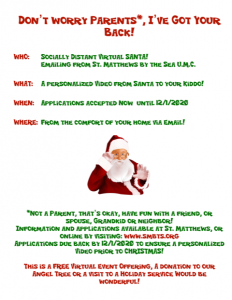
St. Matthews will be offering a safe way to interact with Santa. He will communicate with the parents to make the interactions more personal – with a video made for each family/child featuring Santa and his Elf.
Additional information along with an application sheet/questionnaire will be available on the www.SMBTS.org website for those interested. Deadline to submit an application will be December 1, 2020.
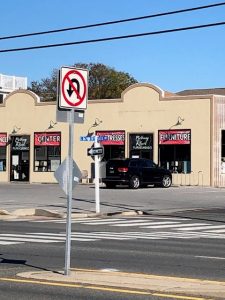
The Town requested DelDot for this signage due to safety concerns at this intersection.
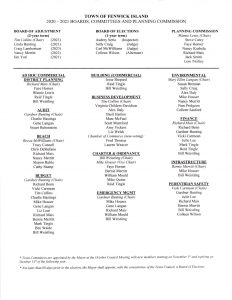
2020-2021 Boards, Committees & Planning Commission
Town Hall will be closed in observance of the following holidays:
November 3rd- Election Day
November 5th- Returns Day
November 11th- Veteran’s Day
November 26th & 27th- Thanksgiving
If you have an emergency call 911, all other calls may be directed to the police on duty police cellphone at (302) 542-8793.
November 15 is America Recycles Day!
In an effort to greatly reduce the contamination that is ending up at Delaware’s sorting facility, we would like you to share the Recycling in Delaware poster with your friends and neighbors. If contamination continues, haulers will likely be forced to increase their rates to customers. Recycling in Delaware is easy. There is only one program that applies to the entire state, no matter if you are at home, work, or school. Please encourage everyone to place all Acceptable materials loose, empty, clean, and dry in their curbside recycling cart or dumpster.
This Recycling in Delaware poster is the only message Delawareans should be following. Recycling varies from state to state, so national and regional messages don’t apply here.
Follow Delaware Recycles for more helpful information that you can share.